
What would you like to find?

Practical guidance for families

Help with everyday personal-care activities

Bathing, dressing, grooming, toileting, moving around the home, and eating are ordinary parts of daily life—until one or more becomes difficult, tiring, unsafe, or dependent on family help. This page explains Activities of Daily Living, what changes families may notice, and how home care may support selected tasks without taking over what a person can still do.

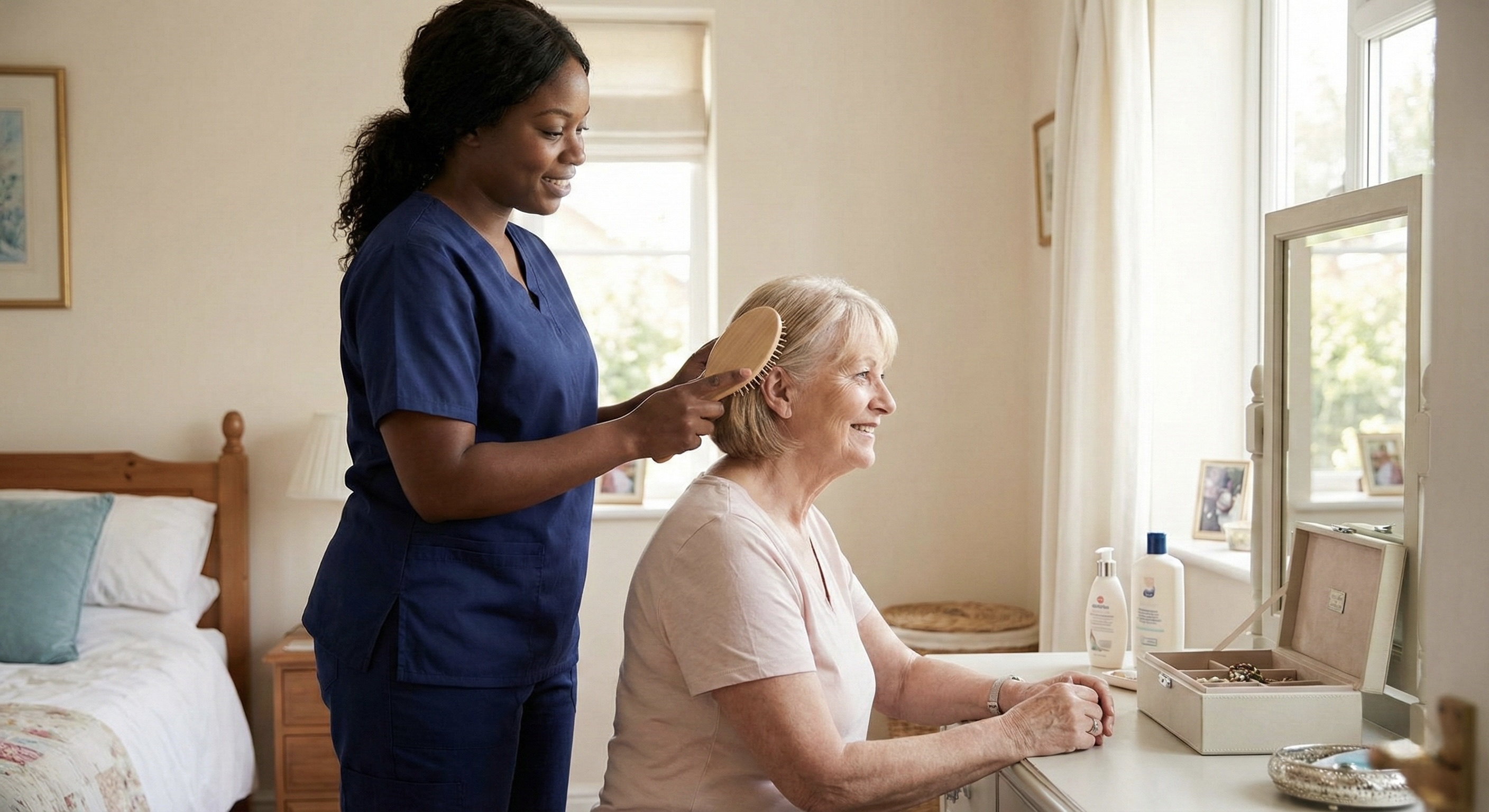
A caregiver brushing an older adult’s hair in front of a mirror.
Care guidance

What Are Activities of Daily Living?

The Everyday Tasks That Support Basic Self-Care

Activities of daily living, often called ADLs, are basic personal tasks people generally need to complete each day. Common ADLs include:

  • Bathing or showering
  • Dressing
  • Grooming and personal hygiene
  • Toileting and continence care
  • Eating and feeding
  • Walking and mobility
  • Moving between a bed, chair, toilet, or other surfaces

A person may need help with one activity while remaining independent with several others. The goal is to understand the specific task, the amount of assistance needed, and whether the need is stable or changing.

Learn More: ADLs vs. IADLs

Care guidance

Signs Someone May Need More Help

Changes Families Often Notice First

A need for help may become visible gradually or after an illness, hospitalization, fall, injury, or change in memory or mobility.

Common observations can include:

  • Wearing the same clothing repeatedly because dressing is difficult
  • Avoiding bathing because getting into the shower feels unsafe
  • Needing furniture or another person to stand or walk
  • Difficulty reaching the bathroom in time
  • Trouble preparing for or completing meals
  • Increased fatigue during ordinary routines
  • More falls, near-falls, or fear of falling
  • Forgetting the steps of familiar self-care tasks
  • A family caregiver providing more hands-on help than before

These signs do not identify a diagnosis. They indicate that the current level of support may deserve review.

A closer look

How Home Care Can Help

Support the Person — Not Replace the Person

Personal care can be planned around the individual’s actual abilities. Depending on assessed needs and the service plan, assistance may include standby support, cueing, partial hands-on help, or more direct assistance with approved daily-care tasks.

Eden’s approach is to support what the person can still do safely while providing help where it is genuinely needed.

Life at home

When Mobility Is Part of the Problem

Daily Care and Movement Often Overlap

Bathing, toileting, dressing, and eating may become difficult because the person cannot safely stand, walk, reach, turn, or transfer without assistance.

Transfer and mobility needs should be reviewed separately because the safe method depends on the person’s strength, balance, equipment, environment, and the caregiver’s competency.

Explore Mobility & Transfer Assistance

A caregiver walking beside a man using a walker in a clear hallway.

When Memory Changes Affect Daily Routines

The Person May Know the Task but Lose the Sequence

Memory loss or dementia can affect initiation, sequencing, judgment, recognition, and tolerance of personal-care routines. Someone may need reminders, cueing, redirection, a calmer pace, or a more predictable routine.

Eden does not use this page to diagnose cognitive conditions. Families who notice memory-related changes can review the dedicated dementia-support pathway.

Care guidance

Maryland and Pennsylvania

The Care Need May Be Similar; the Service Framework Is Different

Eden’s Maryland pathway can include non-clinical personal care and, where separately authorized and clinically appropriate, private-duty nursing services. Daily-living assistance remains distinct from skilled nursing.

Eden provides non-skilled home-care services through its licensed Home Care Agency/Home Care Registry framework. Personal assistance may include approved ADL support, but Pennsylvania home care must not be represented as skilled nursing.

How to Decide What Level of Help Is Needed

Start With the Tasks, Not a Service Label

A useful first conversation focuses on:

  1. Which daily activities are becoming difficult?
  2. What can the person still do independently?
  3. Is help needed for safety, cueing, hands-on assistance, or all three?
  4. Has the need changed recently?
  5. Is mobility equipment involved?
  6. Does the person live alone or have family support?
  7. How often is assistance needed?
  8. In what state and ZIP code will care be delivered?

Eden then determines the appropriate next assessment and service pathway.

Related Services

Help with bathing, dressing, grooming, toileting, feeding, hygiene, and related daily routines.

Help with ordinary meal planning, preparation, setup, and mealtime routines within the approved care plan.

Individualized support focused on ability, routines, choice, and approved assistance needs.

A next step that fits

List the daily activities that need support

Identify which activities—such as bathing, dressing, toileting, eating or moving around—need more assistance. The person’s preferences, the home setup and the care provider’s authorized scope affect the plan.