
Home care and home health: understand the difference
“Home care” and “home health” sound similar, but they can involve very different services, professionals, payment rules, and goals. A person may need help with bathing, meals, companionship, mobility, and daily routines; another may need intermittent clinical treatment from a home health provider; in Maryland, private-duty nursing is another distinct pathway. This guide helps separate those categories before families start comparing providers.

Home Care
Support With Everyday Living
Home care generally focuses on practical assistance that helps someone remain at home and manage ordinary daily routines.
Examples can include:
- Bathing and dressing assistance
- Toileting and hygiene
- Mobility support
- Meal preparation
- Light housekeeping and laundry
- Companionship
- Grocery shopping and errands
- Medication reminders for self-administered medication
- Respite care
- Safety supervision
- Overnight or extended-hour support
Home Health and Skilled Clinical Care
Clinical Services Require a Different Professional Role
Skilled clinical care may include nursing assessment, medication administration, wound care, clinical monitoring, device care, or other services that require a licensed nurse or another appropriately licensed clinician.
The exact service a provider may perform depends on the provider’s license, service model, staff qualifications and competency, patient-specific orders or care plan when required, and applicable state rules.
Why Eden’s Maryland and Pennsylvania Pages Look Different
One Brand, Two Different State Frameworks
For nursing or other clinical needs, ask Eden how professional care planning, the treating team and the appropriate clinician fit into the arrangement.
Private-Duty Skilled Nursing
Eden’s Pennsylvania operation provides licensed non-skilled home care. Skilled nursing, therapy and home-health care require a separately authorized provider.
Home Care and Home Health Can Exist at the Same Time
Different Providers May Address Different Needs
A person can need help with bathing, meals, housekeeping, and supervision while also receiving a separate skilled clinical service.
The important question is not which label sounds more advanced. It is whether each task is being performed by the right provider, under the right authority, with the right plan.
Hospital Discharge Example
A Single Transition Can Involve Both Types of Support
After hospitalization, a person may need:
Home-care support:
- Bathing and dressing
- Meals
- Mobility assistance
- Household help
- Supervision
- Clinical support based on the provider-directed plan:
- Wound care
- Medication administration
- Nursing monitoring
- Device-related care
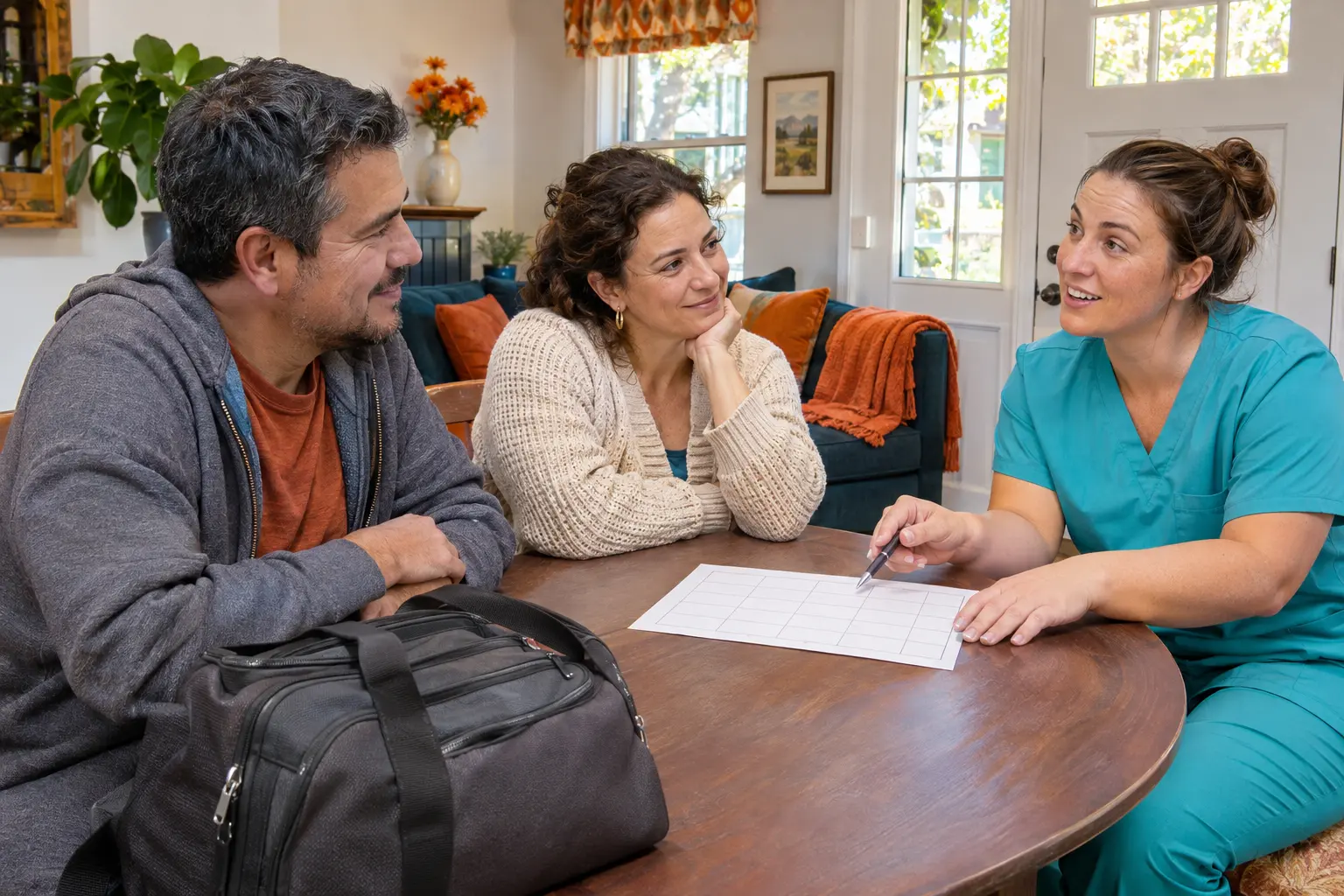
Questions to Ask Any Agency
Do Not Rely on the Company Name Alone
Ask:
- What type of agency are you licensed as in my state?
- Does your agency provide this specific service, and what assessment or care-planning process applies?
- Who performs the service?
- What credentials or competency are required?
- Is an assessment or provider order required?
- Who supervises the care?
- What happens if the person’s needs become more clinical?
Quick Comparison
Home Care
Primary purpose: Everyday living support
Typical staff: Caregivers/direct care workers/CNAs or similar roles depending on service and state
Examples: ADLs, IADLs, companionship, respite, meals, household support, supervision
Home Health / Skilled Care
Primary purpose: Clinical care
Typical staff: Licensed nurses and other licensed clinicians, depending on the service and provider model
Examples: Skilled nursing and other clinical services within provider scope
Describe the task before choosing a type of provider
Explain whether help is needed with daily living, medication administration, wound care or another task. Eden can explain the service-review pathway; medical decisions and skilled treatment require an appropriately authorized clinician.