
What would you like to find?

Practical guidance for families

Daily support for adults living with disabilities

Adults with disabilities may want support with some parts of daily life and complete independence in others. The right care arrangement starts with the person’s abilities, choices, communication, routines, relationships, work or school, community participation, mobility, personal care, and the support they actually want—not assumptions based on disability.

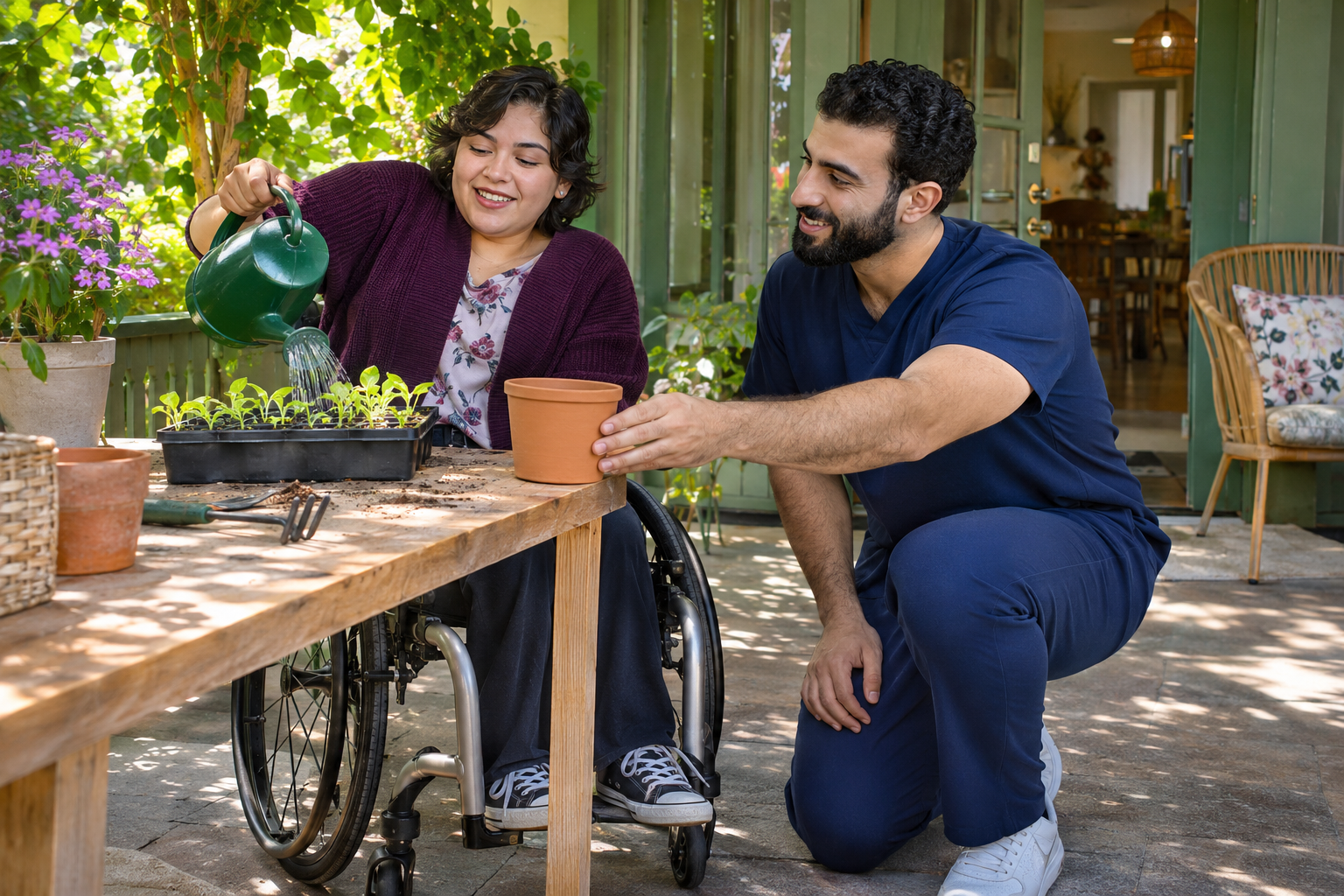
A young adult wheelchair user waters seedlings while a caregiver moves a pot within reach.
Care guidance

Start With Ability and Choice

Ask What Help Is Wanted and What Help Is Actually Needed

Two adults with the same diagnosis may have completely different abilities, routines, communication styles, preferences, and support needs.

A useful care conversation should consider:

  • What the person does independently
  • Which tasks they want help with
  • Which tasks create safety concerns
  • How they communicate choices and preferences
  • Mobility or adaptive equipment
  • Work, school, day-program, or community routines
  • Household responsibilities
  • Family or natural supports already in place
  • The schedule and level of supervision actually needed
A closer look

Personal Care Support

Assistance With Daily Self-Care When Needed

Approved support may include bathing, dressing, grooming, toileting, hygiene, feeding assistance, and other activities of daily living when those tasks fit the service plan.

Mobility and Transfers

Support Safe Movement Without Making Assumptions

Some adults use wheelchairs, walkers, braces, transfer equipment, or other mobility supports. Others may need only occasional assistance.

Transfer methods must reflect the person’s current ability, equipment, environment, and caregiver competency.

Explore Mobility & Transfer Assistance

Life at home

Household and Community Routines

Home Care Is More Than Personal Hygiene

Depending on the approved service arrangement, support may include meal preparation, laundry, light housekeeping, errands, grocery shopping, companionship, routine cueing, and assistance maintaining an organized home environment.

An adult with a prosthetic leg prepares vegetables beside a caregiver in plain navy scrubs.

Communication and Respect

The Adult Remains at the Center of the Care Plan

Caregivers should communicate directly with the person whenever possible, respect preferred routines, explain what they are doing, ask permission before assisting, and avoid treating an adult like a child because support is needed.

Family input can be valuable, but the individual’s rights, preferences, decision-making authority, and applicable legal representatives must be respected.

Supervision and Safety

Support Should Match the Actual Risk

Some adults need no ongoing supervision. Others may need cueing, standby assistance, or closer supervision because of mobility, judgment, seizure history, cognitive needs, or other documented considerations.

The level of supervision should come from the assessed care need rather than a stereotype about disability.

Care guidance

Maryland and Pennsylvania

The Regulatory Pathway Depends on the State

Eden may provide non-clinical home-care support and, where separately authorized and clinically appropriate, Maryland nursing services. Clinical needs follow the nursing pathway rather than being treated as ordinary caregiver tasks.

Eden provides non-skilled services through its licensed Home Care Agency/Home Care Registry framework. Applicable program or waiver participation must be verified separately from the license itself.

Related Service

For a service-focused explanation of Eden’s support for adults with disabilities, including routines, personal care, community support, household needs, and individualized planning, visit the dedicated service page.

A next step that fits

Build Support Around the Life the Person Is Already Living

Share the location and a general description of the support being considered. Eden will review the request and explain the appropriate next step.