

What would you like to find?

Practical guidance for families

Plan the return home after discharge

A discharge plan can look organized on paper and still feel very different once the person is back home. Walking, bathing, meals, medications, bathroom routines, sleep, appointments, household tasks, and the amount of family help needed may all change at once. This guide helps families think through the practical home-care pieces before the transition happens.

A caregiver welcomes an adult and his family member at the front door.
Care guidance

Start With the Discharge Plan

Home Care Supports the Plan — It Does Not Replace It

Before care begins, families should understand the instructions provided by the hospital, rehabilitation facility, physician, therapist, or other treating clinician.

Important transition information may include:

  • Mobility or weight-bearing instructions
  • Assistive equipment
  • Medication instructions
  • Wound or device-care instructions
  • Diet or swallowing precautions
  • Follow-up appointments
  • Therapy recommendations
  • Warning signs and who to contact
  • Restrictions on bathing, driving, lifting, or activity

Eden caregivers do not independently change clinical instructions. The home-care plan should be built around the approved role and the information available to the agency.

Care guidance

Daily Tasks That May Be Harder at First

The Person May Be Home but Not Back to Their Previous Routine

After discharge, someone may need temporary or ongoing help with:

  • Bathing and dressing
  • Toileting
  • Walking or transfers
  • Meal preparation and setup
  • Light housekeeping and laundry
  • Medication reminders for self-administered medications
  • Safety supervision
  • Getting settled for the night
  • Household routines and errands
  • Family caregiver relief

Explore Hospital-to-Home Support

A closer look

Personal Care and Mobility

Two of the Most Common Practical Gaps

A person who was independent before hospitalization may return home with less strength, lower endurance, pain, balance changes, or new equipment.

Transfer needs should be reviewed before a caregiver is expected to provide a level of physical assistance that may not be safe or appropriate.

Meals and Medication Routines

Keep the Home Routine Organized

Non-clinical support can include ordinary meal preparation and setup based on known instructions, plus reminders for medications the client is responsible for self-administering.

Medication changes, reconciliation, administration, injections, IV therapy, and other clinical functions are separate matters and must follow the appropriate authorized pathway.

Care guidance

Pennsylvania Home Care After Discharge

Non-Skilled Support Only

Pennsylvania home-care services can help with personal care, meals, mobility assistance within the care plan, household support, companionship, respite, reminders, and supervision.

Pennsylvania home care must not be represented as skilled nursing or home health.

Life at home

Prepare the Home Before Arrival

Small Details Can Prevent a Chaotic First Day

Before the person arrives home, consider:

  • Clear walking paths
  • Needed assistive equipment already in place
  • A safe sleeping arrangement
  • Easy access to the bathroom
  • Groceries and approved meal options
  • Clean linens and essential supplies
  • A written contact list
  • Follow-up appointment dates
  • A plan for who is present during the first hours or night
Use Eden’s Hospital-to-Home Family Checklist

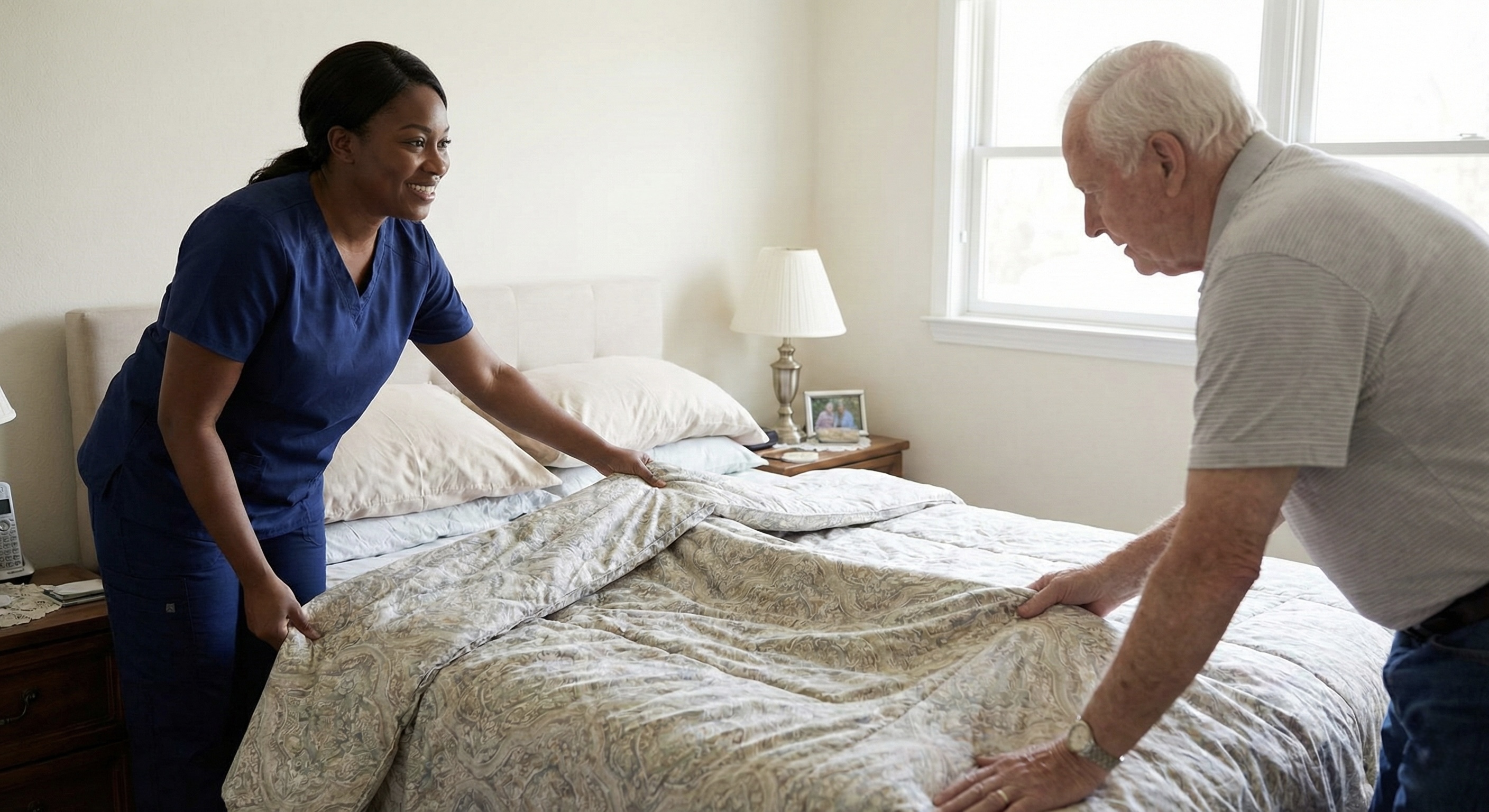
A caregiver and an older adult arranging fresh bedding at home.

Professional Referral Path

For Hospitals, Rehabilitation Facilities, Social Workers & Case Managers

Professionals can send a high-level referral to Eden for review of state, service category, location, schedule, and follow-up needs. Detailed clinical records should use the approved secure workflow rather than an ordinary public form.

A next step that fits

Plan who will help between clinical visits

Use the discharge plan to identify meals, personal care, safe mobility and supervision that may need non-medical support. Eden can review those tasks and timing without taking over the treating team’s clinical responsibilities.