

What would you like to find?

Practical guidance for families

Plan support for aging at home

Aging at home does not mean giving up independence. It means paying attention to how everyday routines are changing—walking, bathing, meals, medications, household tasks, memory, nighttime routines, and the amount of help family is already providing. This guide helps families notice those changes and think through reasonable next steps.

A caregiver and an older adult walking along a residential sidewalk.
Care guidance

Start With What Has Changed

Home care may become worth considering when a person is having more difficulty with:

  • Bathing, dressing, grooming, or toileting
  • Walking, stairs, or transfers
  • Preparing regular meals
  • Laundry and basic household routines
  • Remembering daily tasks or medication times
  • Being alone for long periods
  • Getting through the night safely
  • Returning home after hospitalization
  • Maintaining routines that were previously manageable

One change does not automatically mean someone needs extensive care. The question is what assistance would make daily life safer and more sustainable.

Supporting Independence

Help Where Needed, Choice Everywhere Else

Good home care should not take over simply because a person is older.

Care planning should identify what the client can still do independently, where standby support is enough, and where hands-on assistance is truly needed.

The goal is to support function and choice rather than create unnecessary dependence.

Life at home

Personal Care

When bathing, dressing, toileting, grooming, feeding, or hygiene become difficult, a caregiver may provide approved hands-on or standby assistance.

Mobility & Fall-Risk Support

Changes in strength, balance, endurance, vision, cognition, or home layout can make walking and transfers more difficult.

Eden can review assistance with established mobility routines, transfers, toileting, and supervision. Home care can reduce unsupported moments but cannot guarantee that falls will never occur.
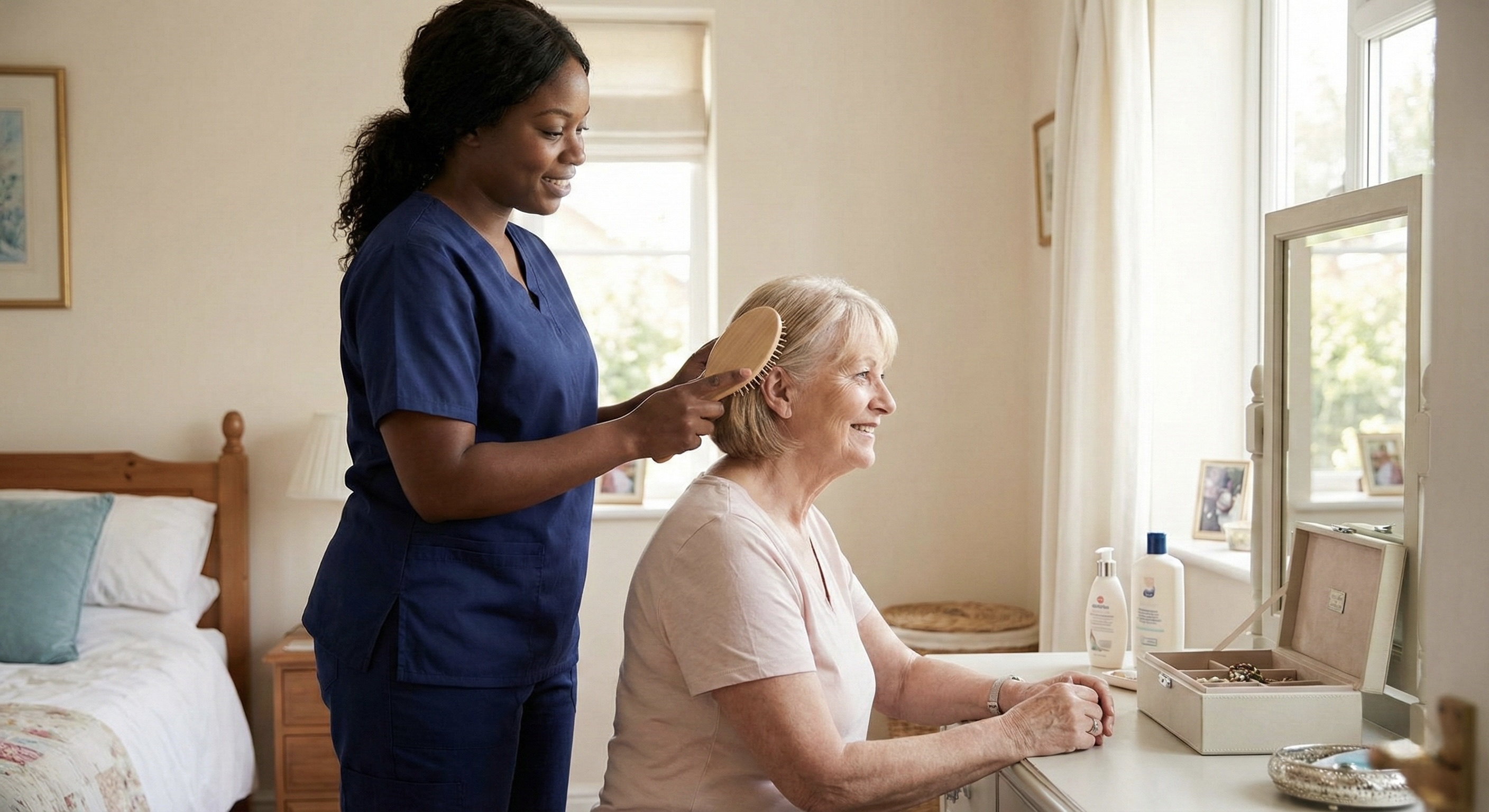
A caregiver brushing an older adult’s hair in front of a mirror.

Meals & Household Routines

A person may be able to live at home but need help preparing meals, doing laundry, changing linens, grocery shopping, or keeping frequently used areas manageable.

Companionship & Social Connection

Aging at home can become isolating when driving stops, mobility declines, friends move away, or family lives at a distance.

Companion care can add conversation, shared activities, meal companionship, routine support, and dependable presence.

A closer look

Memory Changes

Forgetfulness, repeated questions, missed meals, wandering, unsafe appliance use, or difficulty following familiar routines may change how much support is needed at home.

Eden provides non-diagnostic dementia and Alzheimer's support. Sudden or significant cognitive changes should be medically evaluated rather than assumed to be normal aging.

Family Caregiver Support

Aging at home often depends on unpaid help from spouses, adult children, relatives, or friends.

Home care can supplement that support so one family member does not have to cover every morning, evening, appointment, meal, or overnight need.

Care guidance

Home Environment

A care plan may also need to consider:

  • Stairs and railings
  • Bathroom access
  • Lighting
  • Loose rugs and clutter
  • Bed and chair height
  • Pets
  • Assistive devices
  • Emergency access
  • Frequently used items

Eden does not perform construction or prescribe home modifications, but caregivers can work within an established safety plan and report concerns.

When More Support May Be Needed

A few hours of care may no longer be enough when:

  • The person is routinely unsafe alone
  • Family coverage is breaking down
  • Overnight needs are increasing
  • Personal care requires more assistance
  • Mobility has declined
  • Memory-related supervision is becoming continuous
  • A new hospitalization changes the routine
  • Clinical needs develop in Maryland

Eden can review whether the schedule, staffing model, or service pathway should change.

Care guidance

Maryland & Pennsylvania

Aging-at-home support may include personal care and, when separately authorized and clinically appropriate, private-duty skilled nursing.

Eden provides non-skilled home care for aging adults within its Home Care Agency/Home Care Registry scope.

Aging at Home FAQs

Does needing home care mean someone can no longer be independent?

No. Many people use home care specifically to preserve independence by receiving help only with tasks that have become difficult.

How many hours of care are needed?

There is no universal number. It depends on the person's routines, safety, family support, care needs, and schedule.

Can care increase over time?

Yes. Contact Eden when needs change so the plan and schedule can be reviewed.

Can home care replace assisted living or a nursing facility?

Sometimes home care allows a person to remain at home longer, but not every need can be safely supported in every home. The appropriate setting depends on the individual situation.

A next step that fits

Notice the routines that have become harder

Start with specific changes in meals, mobility, household tasks or social connection and ask what the person wants help with. Eden can explain which non-medical support options may warrant a conversation.