
What would you like to find?

Practical guidance for families

Arrange support when you live far away

Long-distance caregiving can mean managing appointments, checking on meals, coordinating siblings, worrying about falls or missed routines, and trying to understand what is really happening from far away. A local home-care plan can help carry defined responsibilities while keeping the person receiving care at the center of decisions.

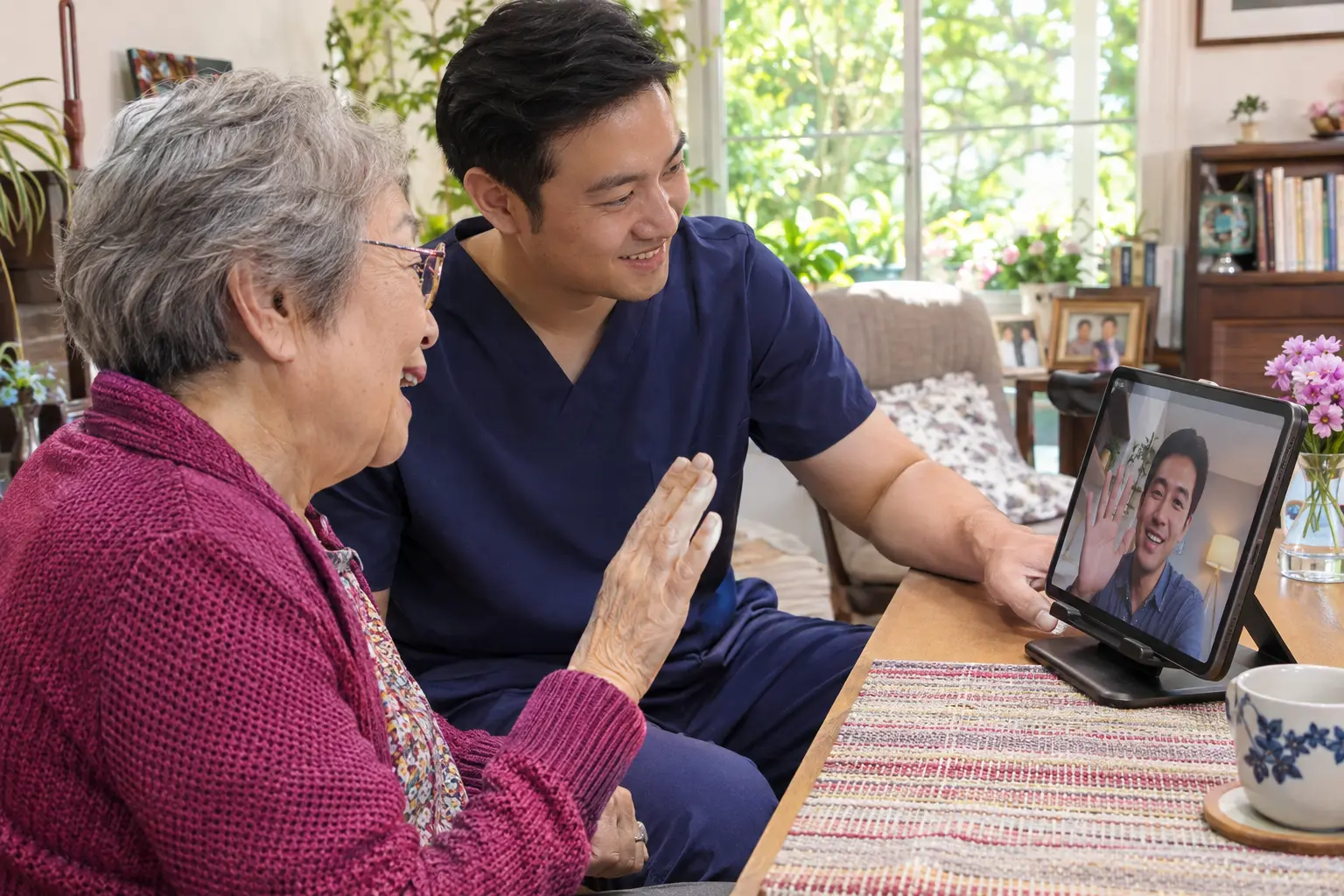
An older adult waves to her son on a tablet while a caregiver adjusts the stand.
Care guidance

The Hardest Part Is Often Not Knowing What Is Actually Happening

Distance Can Turn Small Gaps Into Big Questions

Long-distance families may struggle with:

  • Not knowing whether meals are being prepared
  • Repeated travel for routine tasks
  • Concern about bathing, mobility, or falls
  • A local relative carrying most of the workload
  • Memory-related concerns that are difficult to assess by phone
  • Missed appointments or household errands
  • Uncertainty about whether the person needs a few hours or much more support
  • No clear backup plan if something changes

Home care can address approved tasks in the home; it does not replace emergency services, medical evaluation, or a family’s legal decision-making responsibilities.

Care guidance

Build a Local Support Layer

Decide Which Tasks Need a Person Physically Present

Depending on assessed needs, Eden may help with:

  • Personal care
  • Meals and household routines
  • Companionship
  • Grocery shopping and errands
  • Medication reminders
  • Mobility assistance
  • Safety supervision
  • Respite for a local caregiver
  • Overnight or extended-hour support when appropriate and available

The right schedule should reflect the actual need instead of adding hours simply because family lives far away.

When the Person Lives Alone

Independence Can Continue With Added Structure

For a loved one who lives alone, a few planned visits may be enough—or the situation may require daily, overnight, or more continuous support.

A closer look

Create Clear Communication Expectations

Know What Eden Can Communicate and to Whom

Before care begins, identify the appropriate client contact, authorized representative, family contact, and communication preferences.

Eden must respect client privacy and cannot automatically share personal care information with every relative who calls. The service arrangement should establish who is authorized to receive updates and how non-urgent concerns are communicated.

Life at home

Match the Service to the Need

Common Long-Distance Support Paths

For social presence, routine, conversation, and ordinary support.

For bathing, dressing, toileting, feeding, mobility, and other ADLs.

Homemaker Support

For laundry, light housekeeping, groceries, errands, and home routines.

When the person needs a closer watch during defined periods.

When memory-related routines, cueing, redirection, or supervision are central to the need.

An adult wheelchair user and a caregiver reviewing daily priorities at a table.

Confirm the Service Area First

Location Determines the State Pathway

Eden serves defined counties in Maryland and Pennsylvania. The state determines the applicable scope, staffing model, and program/payment pathways.

Care guidance

Prepare Before the First Call

Useful Information to Have Ready

  • State, city, and ZIP where care will occur
  • Who currently helps locally
  • Which routines are becoming difficult
  • Whether the person lives alone
  • Approximate schedule needed
  • Mobility equipment
  • Memory or supervision concerns
  • Whether the need began after a recent hospitalization
  • Who has authority to participate in care decisions

Do not send detailed medical records through the ordinary public care-request form.

A next step that fits

Decide What Needs a Reliable Local Person, Not Just Another Phone Call

Share the location and a general description of the support being considered. Eden will review the request and explain the appropriate next step.